

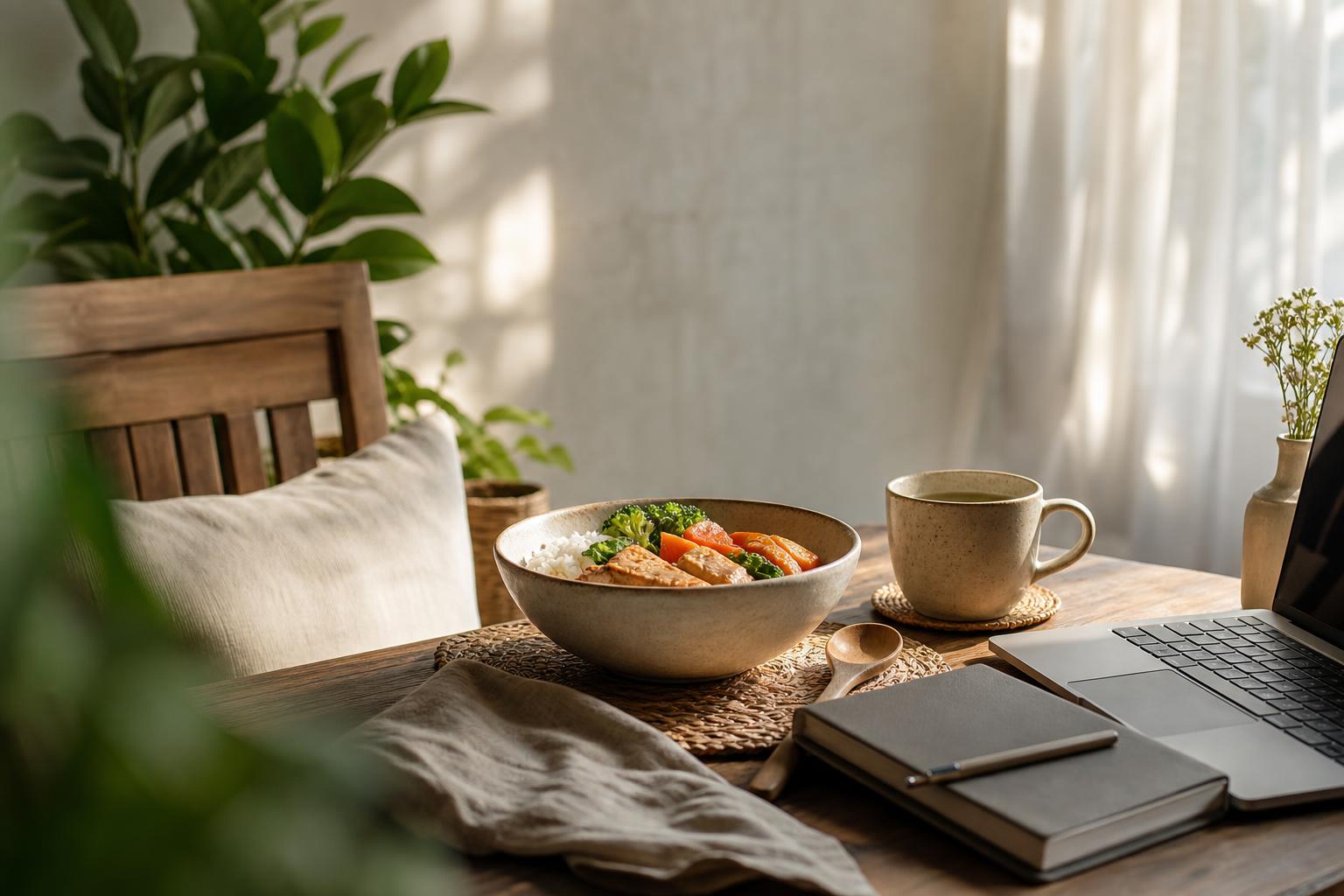
The container is not fancy. Usually it’s just rice, leftovers, maybe whatever ulam survived from the night before, packed before the day fully started and eaten during a break that feels shorter than it should be.
But alam mo ba, on a busy lab day abroad, that kind of lunch can feel like home.
Not the dramatic kind of homecoming with airport hugs and balikbayan boxes. More like the quiet kind. The kind that happens when you open your baon, smell something familiar, and for a few minutes, the noise of work becomes a little softer.
From the outside, it’s just lunch.
From the inside, especially when you’re working far from the Philippines, it can be a small reset. A reminder that you’re not just a worker trying to finish tasks, answer calls, process samples, and keep up with the pace of the day. You’re still a person. A Filipino person, at that, which means rice is not a side dish. Rice is emotional support. Charot, but also not charot.
Lunch Hits Different When the Lab Day Is Full
There are days in the lab when time feels chopped into tiny pieces. You look at the clock and think, “Okay, I’ll take my break after this one thing.” Then that one thing becomes another thing, and then another. Suddenly your stomach is sending you a strongly worded email.
In med tech life, we get used to working with urgency. There’s always something to check, something to verify, something that needs attention. Even when the body is asking for a pause, the mind is still in work mode.
That’s why a simple lunch break matters more than people think.
It’s not always long. It’s not always peaceful. Sometimes you’re eating quickly because the next part of the shift is already waiting. Sometimes the food is cold in the middle because the microwave did what microwaves do — hot on the edges, surprise freezer in the center. Hay nako.
But still, that moment helps.
You sit down. You open your baon. You take that first bite of rice and familiar flavor. And for a few minutes, your brain remembers: I am allowed to stop.
Sometimes the most comforting part of the day is not a big blessing, but a small lunch that reminds you where you came from.
Baon Is More Than Budgeting
Of course, let’s be honest. Bringing baon abroad is practical. Food outside can be expensive, and when you start converting prices in your head, naku, suddenly that sandwich feels like it should come with free tuition.
So yes, baon helps with money. It makes adulting a little less painful. It also saves you from standing in line when you only have a short break and you’re already hungry enough to become a different person.
But Filipino baon carries something else.
It carries routine. It carries memory. It carries the feeling of being cared for, even when you packed it yourself while half-awake. It reminds you of home kitchens, leftovers that somehow taste better the next day, and the very Filipino belief that a meal is not complete without rice.
There’s something grounding about eating food that tastes familiar in a place where many things still feel foreign. The weather may be different. The language around you may sound different. The workplace culture may be different. But your lunch? Your lunch knows you.
That sounds funny, but if you’ve lived abroad, you probably understand.
Some days, that small container becomes a connection to your old rhythm. It’s like telling yourself, kahit malayo ako, may part pa rin ng bahay dito.
The Quick Message From Home Also Counts
Sometimes it’s not even the food that softens the day. Sometimes it’s a quick message from family during lunch.
A simple “Kumain ka na?” can hit differently when you’re abroad.
Back home, we hear that question all the time. It can even feel too normal. But when you’re overseas, working through a busy day, that message becomes a small form of care crossing time zones.
Maybe the reply is short because the break is short. Maybe it’s just a photo of lunch, a heart emoji, or a quick update. Nothing grand. Nothing dramatic. But enough to remind you that there are people thinking of you while you’re in your scrub suit, trying to eat before work pulls you back in.
And honestly, Filipino family group chats are their own ecosystem. One person sends a message, another sends a forwarded prayer, someone reacts with a sticker, someone asks a completely unrelated question, and suddenly your lunch break has become a mini reunion. Sometimes chaotic, sometimes confusing, but still comforting.
Grabe, even silence feels less heavy when you know someone might message later.
That Short Break Can Make You Feel Human Again
Working abroad can slowly train you to keep going. You learn to adjust. You learn the system. You learn how to be professional even when you’re tired. You learn how to smile, answer politely, and carry on.
That’s not bad. It’s part of surviving and growing.
But if we’re not careful, we can start treating ourselves like machines too. As if hunger can wait forever. As if rest is optional. As if being strong means ignoring the small needs that keep us steady.
Lunch interrupts that.
Even a short lunch break says, pause muna. Eat. Breathe. Drink water. Look away from the work for a few minutes. Remember that your body is not just something that brings you to your shift. It’s part of you, and it needs care too.
As a med tech, I find that funny sometimes because we spend our working hours dealing with health, values, results, and all these reminders of how fragile the body can be. Then we forget to drink water or eat properly because we’re busy. Very consistent. Very human. Very “med tech na med tech.”
But that’s why small resets matter.
What Helps Me Appreciate Lunch More
I don’t think every lunch break has to become a deep emotional reflection. Some days, lunch is just lunch. You eat because you’re hungry, then go back to work. That’s okay too.
But when the day is heavy, these small things help make the break feel more like a real pause:
- Bring something familiar when you can. It doesn’t have to be special. Rice and leftovers are already a blessing on a busy day.
- Step away from work mode, even briefly. If possible, don’t spend the whole break mentally checking what’s next.
- Reply to home when you have the energy. A short message can make you feel less far away.
- Don’t feel guilty for resting. You’re not being lazy. You’re refueling.
- Pack food that actually comforts you. Not just what looks healthy or aesthetic. Life abroad is already demanding. Your lunch can be kind.
Nothing fancy there. Just small survival habits.
Home Can Fit in a Lunch Container
That’s the thing I keep coming back to. Home abroad is not always a place. Sometimes it’s a taste. A smell. A message. A small container of rice opened during a tired afternoon.
We often think comfort has to be big to count. A vacation. A reunion. A long call. A major breakthrough. And yes, those are beautiful. But on ordinary working days, comfort often arrives quietly.
It arrives as baon.
It arrives as leftovers.
It arrives as a quick “Kumain ka na?” from someone who knows you’re far away but still wants to check if you’ve eaten.
For Filipino workers abroad, especially those of us in healthcare and lab life, lunch can become more than a break. It becomes a reminder that we are held together by small things. Food. Family. Routine. Faith, too, in the quiet sense — trusting that even ordinary days have grace tucked somewhere inside them.
So if today is busy and your lunch is simple, I hope you don’t dismiss it too quickly.
Open the container. Eat the rice. Enjoy the familiar flavor. Reply to the message if you can. Take the few minutes given to you and let them count.
Sometimes, that’s enough to help you return to the rest of the shift a little more whole.
And if the rice is a little hard because it came from the fridge and the microwave betrayed you again — well, welcome to OFW lunch life. Still grateful. Still hungry. Still going.