Have you ever seen one scary medical word trend online and suddenly your brain goes, “Ay naku, bagong pandemic ba ito?” Same. My med tech brain tries to stay calm, but my Filipino tita brain is already checking the pantry, the balcony, and that one suspicious corner behind the shoe rack.
This week’s word is hantavirus, after reports of a cruise ship cluster being tracked by the World Health Organization in May 2026. And yes, the news is unsettling: seven cases, three deaths, and a lot of people suddenly Googling “mouse virus symptoms” while side-eyeing every tiny scratching sound at home.
So let’s make this simple. No medical brochure vibes. No panic. Just the straight answer: what hantavirus is, how people actually catch it, what symptoms to watch for, and how to clean rodent mess without accidentally turning your storage room into a science experiment. Because grabe, nobody needs that.
First: What Is Hantavirus?
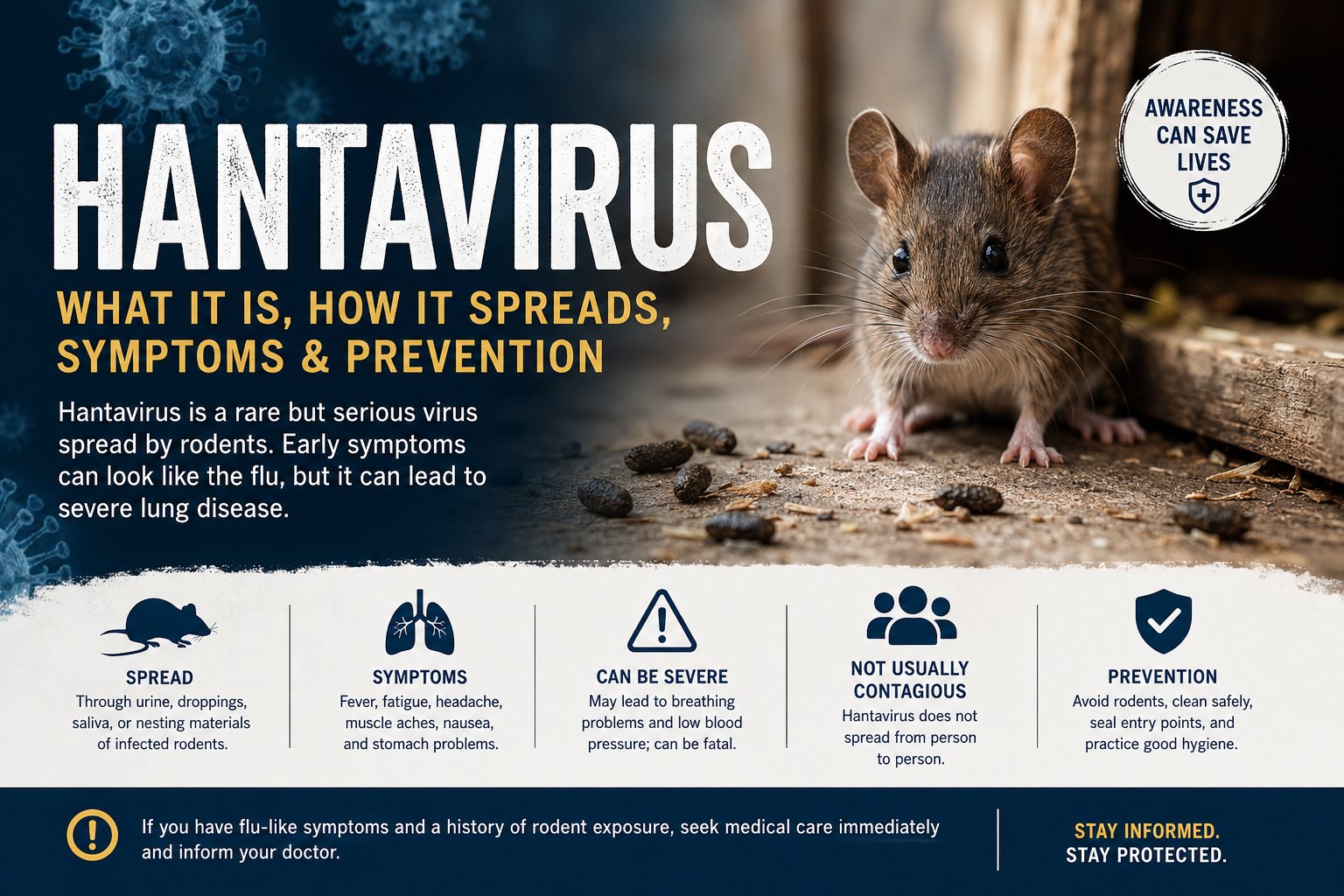
Hantavirus isn’t one single virus. It’s a group of related viruses carried mostly by rodents, especially mice and rats. The virus can be found in their urine, droppings, and saliva.
Humans usually get infected when dried rodent waste gets disturbed, tiny particles float into the air, and someone breathes them in. Classic scenario? You open an old shed, cabin, basement, barn, stockroom, or storage area that’s been closed for months. It smells dusty. You see mouse droppings in the corners. Then you grab a broom like a responsible adult.
That broom moment? That’s the problem.
Hantavirus is not airborne like flu or COVID. It doesn’t usually spread because someone coughed near you. The main risk is breathing in particles from rodent waste.
The Two Main Illnesses It Can Cause
Different hantavirus strains cause different types of disease. The two big ones are:
- Hantavirus Pulmonary Syndrome (HPS) — seen mostly in the Americas. This one attacks the lungs and can become severe fast.
- Hemorrhagic Fever with Renal Syndrome (HFRS) — seen mostly in Europe and Asia. This one affects the kidneys and can also be serious.
Both deserve respect. But HPS is especially scary because once the respiratory phase starts, it can move quickly. The reported fatality rate for HPS is around 38%. That number is not there to make you panic, ha. It’s there so we don’t treat rodent droppings like ordinary dust bunnies.
How You Actually Catch Hantavirus
Let’s get practical. You don’t catch hantavirus by walking past a random mouse outside like it’s a villain in a teleserye. Most infections happen when people are exposed to contaminated rodent waste in enclosed or poorly ventilated spaces.
Real-life risky situations include:
- Cleaning a storage room with mouse droppings
- Sweeping a dusty garage, barn, or shed
- Opening a cabin or vacation house after months of being unused
- Camping or sleeping where rodents have been active
- Handling nesting material, old boxes, or insulation contaminated by rodents
The main route is breathing in contaminated particles. Other possible routes are less common:
- Rodent bites from an infected animal
- Touching contaminated surfaces and then touching your eyes, nose, or mouth
- Person-to-person spread, but only with one known strain: Andes virus
That Andes virus detail is important. It’s found in South America and is the only hantavirus known to spread between people. Even then, it’s rare and usually linked to close, prolonged contact, like household or intimate contact. It’s not like influenza where one cough in a crowded room and suddenly everybody is doomed. Hindi ganun.
Why People Miss the Early Symptoms
The annoying thing about hantavirus is that the early symptoms are painfully generic. If you work in healthcare, you know this already: half of medicine begins with “flu-like symptoms,” which is both true and deeply unhelpful at 2 a.m.
Symptoms usually show up 1 to 8 weeks after exposure. Early signs can include:
- Fever
- Muscle aches, especially large muscles like thighs, hips, back, or shoulders
- Headache
- Chills
- Nausea or vomiting
- Diarrhea or abdominal pain
- Fatigue that feels heavier than normal
At this stage, many people think, “Maybe I’m just tired,” or “Baka viral lang,” or “I shouldn’t have eaten that questionable leftover.” Relatable. But if you recently cleaned an area with rodent droppings, that exposure history matters a lot.
The Severe Phase: When It Becomes an Emergency
After the early symptoms, HPS can shift into the dangerous phase. This is when the lungs get involved. Fluid can build up, making it harder to breathe.
Warning symptoms include:
- Coughing
- Shortness of breath
- Chest tightness
- Rapid breathing
- Feeling like you can’t get enough air
- Dizziness or weakness
If you’ve had rodent exposure and then develop breathing symptoms, don’t “observe muna” at home with ginger tea and prayers alone. I love salabat as much as the next person, but this is hospital territory.
If you feel flu-ish after rodent exposure, tell the doctor exactly that: “I cleaned an area with mouse droppings recently.” That one sentence can change the whole workup.
Is There a Treatment?
There’s no simple cure for hantavirus infection. No magic pill. No “take this for five days and you’re good” situation.
Care is mostly supportive, which means doctors manage the complications while the body fights the infection. Depending on severity, that can include oxygen, IV fluids, blood pressure support, close monitoring, and ICU care if breathing gets worse.
This is why early recognition matters. The sooner someone gets medical care, especially before severe respiratory failure sets in, the better the chances of survival. In the lab and hospital world, timing is everything. Sometimes the difference is not a fancy machine or a dramatic TV moment. Sometimes it’s a patient saying, “Actually, I cleaned a rodent-infested shed two weeks ago.”
So What Happened on the Cruise Ship?
Here’s the news hook. On May 2, 2026, the WHO was notified of a cluster of severe respiratory illness on a cruise ship carrying 147 passengers and crew. By May 4, there were seven cases: two confirmed hantavirus infections and five suspected cases. Three people had died.
That’s heavy. No need to sugarcoat it.
But it also needs context. WHO has described the broader public risk as low. This doesn’t mean the situation is nothing. It means investigators are looking at a defined cluster, not a flu-style virus spreading through airports and malls. Hantavirus is serious, but it’s not easily passed from person to person in the usual way people fear when they hear “outbreak.”
Why does it matter then? Because cruise ships, cabins, campsites, warehouses, and storage areas all have one thing in common: enclosed spaces where pests can hide if control measures fail. And if rodent contamination happens, cleanup has to be done properly. Not with vibes. Not with a walis and confidence.
The Cleanup Rules That Actually Protect You
This is the most useful part, so let’s slow down. If you find rodent droppings at home, in a shed, in a cabin, or at work, your instinct might be to sweep everything quickly. Very Filipino. Very efficient. Also very wrong in this case.
Do Not Sweep or Vacuum Dry Droppings
Sweeping and vacuuming can send contaminated particles into the air. That’s exactly what you don’t want.
Instead, do this:
- Ventilate the space first. Open doors and windows and leave the area for at least 30 minutes if you can.
- Wear protection. Use gloves and an N95 mask or better. A cloth mask is not enough for this job.
- Wet the droppings before touching them. Use disinfectant or a bleach solution. A common option is 1 part bleach to 9 parts water.
- Let it soak. Give the disinfectant several minutes to work. Don’t spray and immediately wipe like you’re in a speed-cleaning contest.
- Wipe, don’t sweep. Use paper towels or disposable cloths.
- Bag the waste securely. Seal it in a plastic bag, then place that inside another bag if possible.
- Wash your hands well. Gloves off, then soap and water. Sing a full chorus if needed. Your choice of OPM.
Also: never mix bleach with ammonia or other cleaners. That creates toxic fumes, and then we have a new problem. Hay nako, one hazard at a time please.
Prevent Rodents From Moving In Like Rent-Free Tenants
Cleanup is one thing. Prevention is better, cheaper, and less kadiri.
- Seal holes and gaps where mice can enter, especially around pipes, doors, vents, and walls
- Store food in sealed containers, including pet food
- Keep trash covered and remove it regularly
- Clear clutter where rodents can nest
- Use traps safely and check them often
- Call pest control if the infestation is bigger than “one tiny mouse with audacity”
If you’re camping or staying in a cabin, do a quick scan before unpacking. Look at corners, cupboards, under beds, near food storage, and along walls. If you see droppings, ventilate and clean properly before sleeping there. Your future lungs will thank you.
What Should Travelers Worry About?
If you’re going on a cruise, camping trip, or rural stay, this doesn’t mean you need to cancel everything and live in bubble wrap. The risk for most travelers is still low. But awareness helps.
Pack or ask about basics:
- Is the room or cabin clean and pest-free?
- Are food areas protected from rodents?
- Are there visible droppings or gnaw marks?
- Can you ventilate the space?
- Do you have access to gloves, disinfectant, and a proper mask if needed?
Not glamorous travel advice, I know. Nobody posts “checked for mouse poop” on Instagram stories. But real safety is often boring. And boring prevention is still better than dramatic ICU energy.
The Bottom Line, Without the Panic
Hantavirus is rare, serious, and mostly preventable. It spreads mainly through exposure to infected rodent urine, droppings, or saliva, especially when contaminated dust is stirred up and inhaled. It’s not airborne like flu. Person-to-person spread is rare and limited to the Andes virus strain.
The early symptoms can look like the flu, but the red flag is the story behind it: recent rodent exposure. If that applies to you and you develop fever, body aches, stomach symptoms, or especially breathing trouble, get medical help and say the exposure clearly.
And if you remember only one thing from this post, make it this:
Don’t sweep dry rodent droppings. Ventilate, wet with disinfectant, wear an N95, and wipe carefully.
Simple? Yes. Boring? Also yes. But sometimes the most boring advice is the one that keeps you out of the emergency room.
Kayo, have you ever opened an old storage room or cabin and found surprise rodent evidence waiting like an unpaid tenant? Tell me your cleanup horror story — and please say you didn’t use a broom first.