

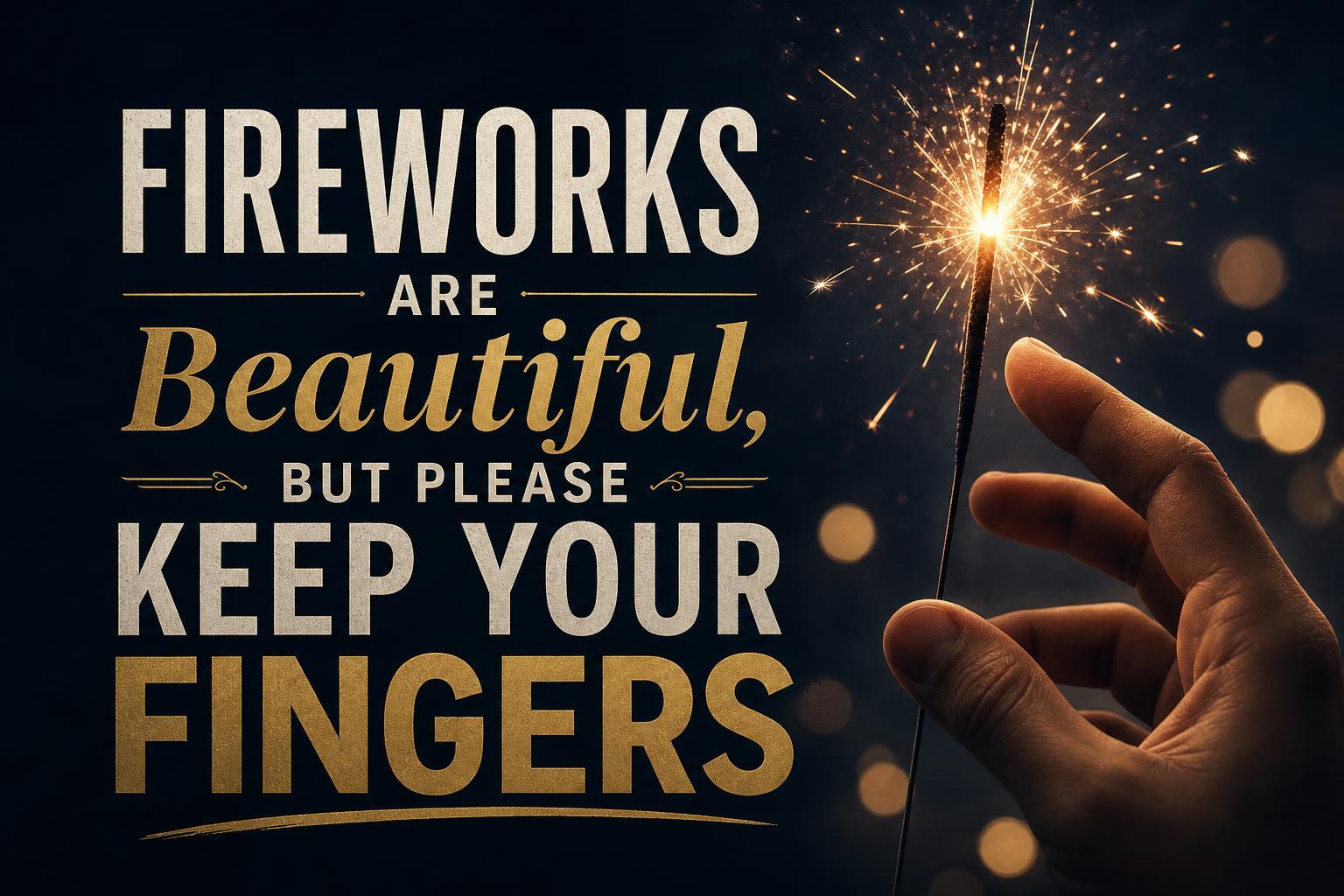
There is always that one firework that sounds less like a celebration and more like something exploded beside your left kidney.
You know the one. Everyone is smiling, the sky lights up, somebody says, oohhh, then suddenly BOOM — and all the adults pretend they did not jump. The kids either laugh or cry. The dogs start barking like they are filing a formal complaint. Somewhere, a car alarm joins the orchestra. Grabe.
From the outside, 4th of July fireworks look like pure fun. Bright colors, family gatherings, backyard food, photos, videos, and that nice feeling of everyone looking up at the same sky for a few seconds.
But the other side of it is not always cute.
As a med tech, my brain sometimes goes to the less festive part. Not because I want to be the KJ of the party — ay naku, nobody invites the safety reminder person to the barbecue — but because fireworks can turn from wow to ER visit very quickly.
The prettiest fireworks are still not worth a burned hand, an injured eye, a frightened child, or an exhausted emergency worker.
The Problem Is Not Celebration, It Is Carelessness
I understand why people love fireworks. There is something exciting about them. They make a regular night feel like an event. They bring people outside. They make kids point at the sky. They give adults a reason to pause, even if just for a few minutes.
And honestly, after a long week of work, bills, responsibilities, and adulting that feels like a never-ending specimen log, I get it. People want to celebrate. People want noise, color, food, and a little bit of joy.
The issue is when celebration becomes careless.
Fireworks are not toys. They can cause burns, hand injuries, eye damage, smoke exposure, noise stress, and fires. Even small fireworks can hurt someone if they are handled the wrong way or used too close to people, homes, dry grass, cars, or pets.
Sometimes people think, It is just one firework. Or, We have done this before. Or the very Filipino classic: Sandali lang naman.
That “sandali lang” can be the exact moment something goes wrong.
Hands, Eyes, and Burns Are Not Minor Details
When people talk about fireworks injuries, they often imagine extreme cases. But even “small” injuries can be painful, expensive, and life-changing.
A burn on the hand can affect work, cooking, driving, writing, or simply washing your hands without wincing. An eye injury is even scarier. Our eyes are delicate, and fireworks do not need to be huge to cause damage. Sparks, debris, smoke, or a misfired firework can affect someone standing nearby, not just the person lighting it.
And let us be honest: many people watching fireworks are not wearing any protection. Kids are running around. Adults are holding phones to record. Somebody is too close. Somebody is distracted. Somebody is saying, “Wait, one more video!” while standing in a spot that is not exactly safe.
We love documenting everything now. I am guilty too. Food first, picture muna. Sunset, picture. Fireworks, video. But sometimes the safest memory is the one you watch with your actual eyes from a safe distance, not through a phone held too close to the action.
Smoke and Noise Affect More People Than We Think
Fireworks do not just disappear after the bright part. There is smoke. There is residue. There is that smell in the air that can be irritating, especially for people with asthma, breathing problems, or sensitivity to smoke.
Not everyone can simply “enjoy the show.” Some people are indoors trying to breathe comfortably. Some older adults may be resting. Some babies may be sleeping. Some neighbors may have health conditions we do not know about.
Then there is the noise.
For some of us, the loud bangs are part of the fun. For others, they are stressful. Children can get overwhelmed. Pets can panic. Dogs and cats do not understand holidays or patriotism or why the sky is suddenly attacking them. They just hear terrifying sounds and react.
Even adults can feel noise stress. Loud, sudden explosions can be hard for people who are anxious, sensitive to sound, or simply tired. And yes, tired is valid. Not everyone has the same nervous system. Not everyone is in party mode.
Please Think About the People Working While Others Celebrate
This is the part I always think about: while many families are outside celebrating, emergency workers are on standby.
Firefighters, paramedics, ER staff, hospital workers, police, dispatchers — they do not get a quiet holiday just because the rest of the neighborhood is grilling, laughing, and setting things off in the driveway.
Every preventable injury adds to someone else’s workload. Every fire risk becomes someone else’s emergency. Every unsafe choice can pull emergency workers away from other people who also need help.
And if you have ever worked a holiday shift in healthcare, you know the feeling. The world outside is celebrating, and you are inside working, trying to keep things moving. The least we can do is not make their night harder because somebody wanted to test if a firework could still light after three failed attempts. Hay nako.
A Few Safety Reminders, From Someone Who Still Wants You to Enjoy
I am not saying cancel all the fun. I am saying celebrate in a way that does not end with a bandage, a fire truck, or a group chat update that starts with, “Guys, pray for us.”
If fireworks are part of your 4th of July, here are a few reminders worth keeping:
- Follow local rules. If certain fireworks are not allowed in your area, do not use them. Rules are usually there because something bad has happened before.
- Keep children at a safe distance. Kids are curious and fast. That is a dangerous combination around fire, sparks, and explosions.
- Protect your eyes and hands. Do not lean over fireworks. Do not hold lit fireworks. Do not try to relight anything that did not work.
- Stay away from dry grass, trash, cars, and houses. Fire spreads quickly, especially when people are distracted.
- Be mindful of smoke. If someone nearby has breathing issues, give them space and do not create unnecessary smoke close to homes.
- Think of pets before the noise starts. Keep them indoors, in a safe space, with water and comfort if they get scared.
- Respect neighbors. Not everyone wants fireworks late into the night. Some people have work early. Some are caring for babies or elderly family members.
- Do not mix alcohol and fireworks. This should be obvious, but apparently humans need reminders. Fire plus impaired judgment is not a love team.
Celebrating Safely Is Still Celebrating
Sometimes safety reminders sound boring because they feel like rules. But really, they are about protecting the celebration.
Because the best kind of holiday is the one where everyone goes home okay. No burns. No eye injury. No scared pet lost in the neighborhood. No neighbor calling emergency services because a spark landed where it should not. No family member spending the night in urgent care instead of around the table.
And maybe that is the simple reminder for this 4th of July: enjoy the lights, but do not forget the people around you.
Look up at the sky. Eat the food. Take the photo if you must — from a safe distance, please. Laugh when the loud one makes everyone jump. Check on the kids. Bring the pets inside. Give your neighbors some peace. Say a small prayer for the emergency workers who are ready to respond while others are celebrating.
There is nothing wrong with joy. We need it, actually. Life abroad, work, family responsibilities, and everyday stress can make any reason to gather feel extra precious.
But joy does not have to be reckless to be real.
So celebrate, but celebrate safely. Keep your fingers. Protect your eyes. Watch the smoke. Mind the noise. And maybe, just maybe, let the night end with leftovers and chika — not an incident report.