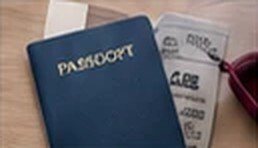
Every batch of new RMTs has the same group chat conversation: Saan ka mag-aabroad? For a lot of Filipino Medical Technologists, working overseas is less a dream than a plan. It can take years, and the right first step depends entirely on where you want to end up, because there is no single “international license.” Each country has its own gatekeeper.
Here is a realistic map of the five most common routes.
United States: ASCPi, VisaScreen and the visa queue
Most Filipino MedTechs bound for the US start with the MLS(ASCPi) certification from the ASCP Board of Certification. ASCP accepts your PRC license number, or a transcript evaluation or official transcripts, as proof of your Philippine education.
Certification is only the first gate. US immigration law (Section 343 of the 1996 IIRIRA) requires foreign medical technologists and laboratory technicians to obtain a VisaScreen certificate from CGFNS. It confirms that your education is comparable to a US graduate’s, that your license is valid and unrestricted, and that your English is good enough.
Then there is the visa itself. Most hospital recruitment uses the EB-3 immigrant visa: the employer files a labor certification (PERM), then an I-140 petition, and you wait for your priority date. The wait is the hard part. In the August 2026 Visa Bulletin the Philippines EB-3 final action date sat at August 1, 2023, so new petitions face a queue of roughly three years before the consular interview.
Finally, about a dozen states and territories, including California, New York, Florida, Hawaii, Louisiana, Nevada, Tennessee and West Virginia, require a separate state license on top of national certification. California in particular does not recognize other states’ licenses or certifications.
Saudi Arabia and the Gulf: verification first, then the exam
The Gulf remains the most common first stop. For Saudi Arabia, the Saudi Commission for Health Specialties (SCFHS) requires primary source verification of your diploma, license and employment through Dataflow, then the Saudi Licensing Exam taken through Prometric. Your classification (technician, technologist, specialist) depends on your degree and experience. The UAE, Qatar, Kuwait and Oman each have their own authority and their own exam, but the pattern is the same: verify, test, classify.
United Kingdom: HCPC registration
In the UK the title “Biomedical Scientist” is protected, so you must be registered with the Health and Care Professions Council (HCPC). Overseas-trained applicants start with the HCPC’s international application route. If HCPC finds gaps, the Institute of Biomedical Science (IBMS) may require a degree assessment, top-up modules and a Registration Training Portfolio before you can earn the IBMS Certificate of Competence. That last step has to be completed in an IBMS-approved UK laboratory, so many Filipinos enter first as associate practitioners or laboratory assistants.
Australia: AIMS skills assessment
For Australia, the Australian Institute of Medical and Clinical Scientists (AIMS) is the assessing authority for the Medical Laboratory Scientist occupation. Applicants without an AIMS-accredited degree are usually assessed first as Medical Laboratory Technicians and can sit the AIMS Professional Examination to be reclassified as scientists. An English test (IELTS, TOEFL or PTE Academic) is mandatory with no exemptions.
Canada: CSMLS prior learning assessment
Canada’s route runs through the Canadian Society for Medical Laboratory Science (CSMLS) Prior Learning Assessment. It reviews your credentials, language test, clinical training and work experience, and may prescribe refresher or bridging courses before you can challenge the national exam. Provincial registration follows separately. Regulators estimate the PLA stage alone at 6 to 18 months.
Before you sign anything
Pick the country first, then the credential. Collecting certificates you will never use is the most expensive way to go abroad.
- Budget realistically. Exam fees, credential evaluations, English tests, document authentication and review courses add up before you earn a single dollar abroad.
- Keep your documents ready. Transcripts, PRC board rating and license, certificates of employment with detailed duties, and NBI clearance are requested by almost every route.
- Use only DMW-licensed agencies. Before deployment you will still need a DMW-processed contract, a medical exam at a DOH-accredited clinic, a Pre-Departure Orientation Seminar and OWWA membership.
- Read the contract. Multi-year agency contracts and training-cost bonds are common. Know the penalties before you sign.
- Keep practicing. Recent, relevant bench experience is the one thing every route rewards.
Working abroad is not the only way to grow. But if it is your plan, knowing which gate you are walking toward saves months and a lot of money.
References
- ASCP BOC, Verify Education: Philippines: ascp.org
- CGFNS, VisaScreen: cgfns.org
- ASCP BOC, Homeland Security rules for laboratory professionals: ascp.org
- Visa Bulletin update, August 2026: conexusmedstaff.com
- ASCLS, Laboratory personnel licensure: ascls.org
- Prometric, SCFHS exams: prometric.com
- IBMS, Route 3 (non-IBMS accredited degrees): ibms.org
- AIMS, Overseas skills assessment: aims.org.au
- CSMLS, Prior Learning Assessment: csmls.org