Laboratory automation is no longer just a bigger analyzer. Three changes in particular are reshaping how laboratories work, in the Philippines and abroad. Here is a quick briefing on each, and what it means for the people at the bench.
1. Autoverification: letting rules release the normal results
Autoverification uses rules in middleware or the LIS to release results automatically when they meet set criteria: QC is acceptable, no instrument flags, results within defined limits, no significant change from the patient’s previous result (delta check). Anything that fails a rule stops for a MedTech’s review.
The published results are striking. In a Korean tertiary hospital, about 65% of CBCs were autoverified, and median reception-to-result time for those samples was 3.2 minutes versus 10.0 minutes for manually verified ones. A Turkish hematology laboratory reported significantly lower rejection, repeat-testing and turnaround times after implementing middleware rules. CLSI’s AUTO10 guideline covers how laboratories should design and validate these rules.
What it means for you: less time clicking “release” on normal results, more time on the abnormal ones that need judgment. But someone has to write, validate and maintain the rules, and that someone is increasingly a MedTech.
2. Total laboratory automation (TLA)
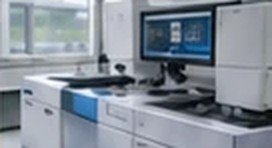
TLA connects sample reception, centrifugation, decapping, analyzers, recapping and storage with tracks and robotics. Large hospital laboratories adopt it to cope with rising volumes, consolidate testing and control turnaround time for urgent tests such as troponin. A study from a Saudi tertiary hospital framed TLA’s benefits as reduced staffing needs, lower operating costs, faster testing and better process control.
What it means for you: fewer manual pre-analytical steps, but new skills in troubleshooting tracks, managing exceptions and monitoring sample flow.
3. Digital morphology and AI
Digital cell morphology systems photograph a blood smear, pre-classify white cells and present them on screen for a MedTech to confirm or reclassify. A manual differential takes roughly 5 to 20 minutes per smear. At one US academic center, more than 65% of differentials are now done with the digital system, with better consistency and faster turnaround. Newer analyzers combine digital morphology with AI pre-classification and remote review.
What it means for you: the microscope is not going away, but morphology skills now include judging the software’s suggestions, and knowing when to go back to the glass slide.
What will not change
Automation can release a normal result in seconds. It cannot decide what an abnormal one means for the patient.
Specimen quality, critical value communication, correlation with the clinical picture, and recognizing when the analyzer is wrong remain human work. The MedTechs who will thrive are those who understand both the science and the systems.
References
- Impact of autoverification in the hematology laboratory: experience with LimasVfy (Korea): oak.ulsan.ac.kr
- Total laboratory automation and turnaround time in a Saudi tertiary hospital, PMC: pmc.ncbi.nlm.nih.gov
- University of Chicago, CellaVision use in the hematology laboratory: hdsi.uchicago.edu
- Clinical and Laboratory Standards Institute (CLSI), AUTO10, Autoverification of Clinical Laboratory Test Results: clsi.org