

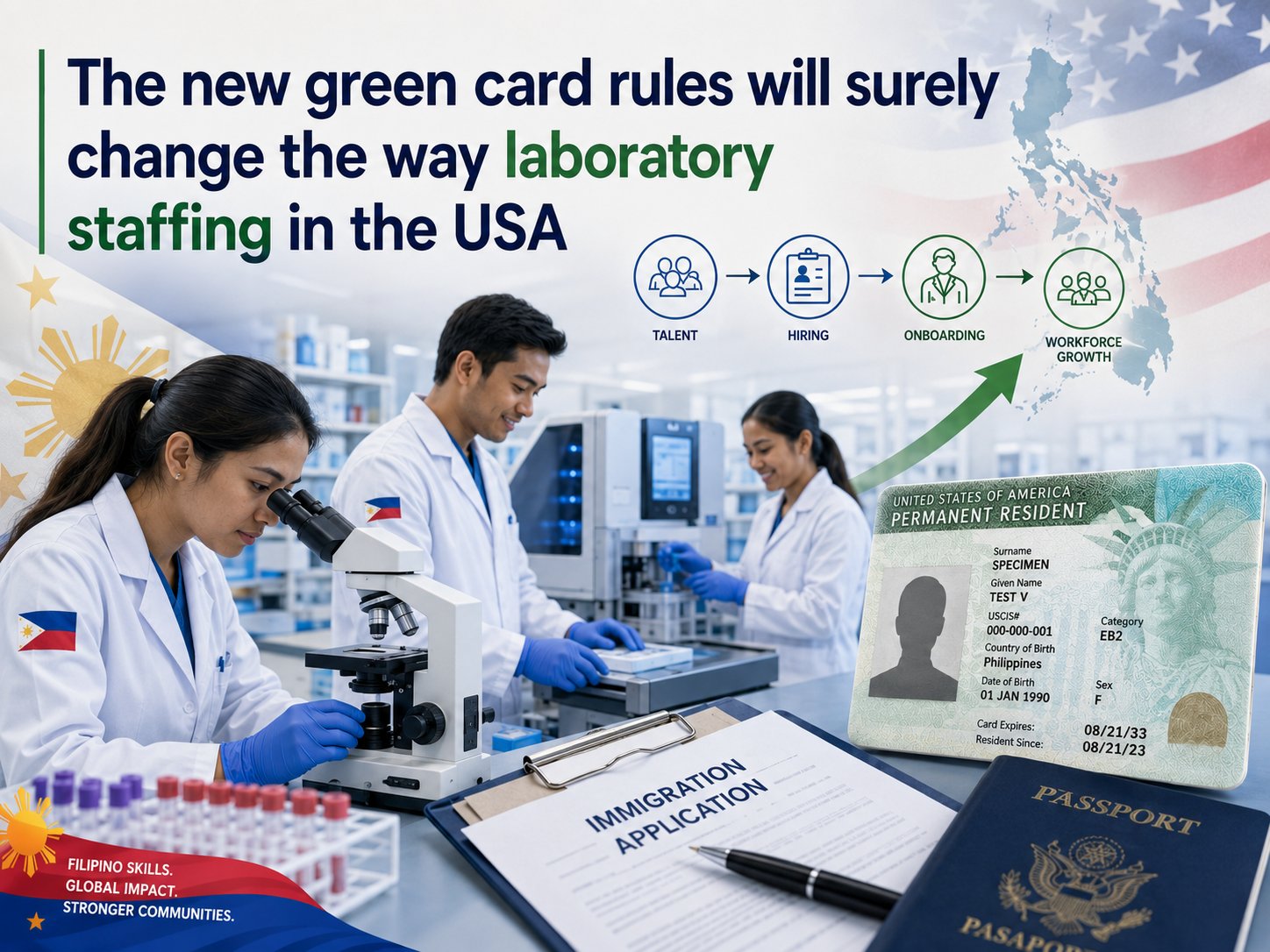
I almost dropped my coffee when I read the USCIS announcement. And not the cute dramatic kind of almost. More like, naku po, my mug has seen my soul leave my body.
On May 22, 2026, USCIS announced new guidance saying that adjustment of status for people already in the U.S. will only be granted in extraordinary circumstances. In plain med tech breakroom English: if you are in the U.S. on a temporary visa and you want a green card, the default route may now be to go through consular processing outside the United States, not simply adjust status while staying in America.
For Filipino medical technologists, hospitals, recruiters, and anyone quietly Googling visa timelines at 2:00 a.m. after night shift, this is not small news. This is the kind of update that makes you pause mid-CBC differential and whisper, wait lang, what does this mean for us?
Quick note: I am a medical technologist, not an immigration lawyer. This post is for awareness and discussion, not legal advice. Please verify details directly with USCIS and consult a qualified immigration attorney before making decisions.
The USCIS Update That Made Everyone Sit Up Straight
According to the USCIS release dated May 22, 2026, the agency is directing officers to treat adjustment of status as an extraordinary form of relief. The announcement says that nonimmigrants such as students, temporary workers, and visitors are expected to leave when their authorized stay ends, and those who want permanent residency should generally apply through the Department of State at U.S. consular offices abroad.
USCIS spokesman Zach Kahler said the policy is meant to return to the original intent of the law, with temporary visitors going home to apply for immigrant visas unless there are extraordinary circumstances.
That phrase is the one that makes everyone nervous: extraordinary circumstances.
Because in healthcare staffing, especially in laboratories, many people have built plans around a certain rhythm: come to the U.S. on a valid temporary status, work, get sponsored, file paperwork, wait, pray, refresh case status, eat pancit for good luck, repeat.
Now? The rhythm may change.
Why Filipino Medical Technologists Should Care
Let us be honest. Filipino med techs are everywhere in the global laboratory workforce. We are in hospital labs, reference labs, blood banks, microbiology benches, molecular sections, and those tiny breakrooms with one questionable microwave that smells like three generations of reheated adobo.
In the U.S., many laboratories depend on internationally trained healthcare workers because staffing shortages are real. Not social media real. Actual short-staffed, double-shift, call-out-on-a-Sunday real.
Filipino medical technologists often enter the U.S. workforce through employment-based routes like H-1B, sometimes with longer-term employer sponsorship for permanent residency. If the green card process becomes more dependent on consular processing, several things could happen:
- Workers may need to leave the U.S. to complete green card processing, unless they qualify for extraordinary circumstances.
- Hospitals may face scheduling gaps if employees need to travel home for interviews and processing.
- Recruitment timelines may get longer, especially for labs already desperate for licensed staff.
- Employees may feel more uncertainty about status, travel, family plans, and job security.
- Employers may need better immigration planning instead of last-minute paperwork panic. Alam mo yun, the classic “deadline is tomorrow” energy.
Laboratory Staffing Was Already Complicated, Bes
Even before this memo, laboratory staffing in the USA was not exactly a walk in the park. More like a walk in the parking lot during winter, wearing the wrong shoes, carrying a specimen bag, and regretting all life choices.
Labs have been dealing with retirements, burnout, night shift shortages, certification requirements, licensing differences by state, budget limits, and competition from travel contracts. Add immigration changes on top, and the whole system starts looking like a chemistry analyzer at 3 a.m. throwing five flags and one cryptic error code.
Filipino med techs are often attractive hires because many of us come with strong training, English proficiency, adaptability, and that legendary ability to function after three hours of sleep. Not healthy, but impressive. Petmalu, but please hydrate.
But immigration uncertainty can make even the most committed healthcare worker hesitate. Would you uproot your life if the pathway suddenly felt shakier? Would you sign a contract abroad if your long-term plan might require returning home mid-process?
What This Could Mean for H-1B Med Techs
The raw notes mentioned this comes after H-1B rule changes earlier this year, and that is important because many Filipino medical technologists in the U.S. are watching both H-1B rules and green card rules together. One change is stressful. Two changes? That is no longer stress. That is a full wellness seminar waiting to happen.
If you are currently on H-1B or planning to apply, the big question becomes: how will your employer handle the transition from temporary work visa to permanent residency?
Here are questions worth asking your HR or immigration attorney:
- Will my green card case require consular processing?
- If yes, when would I need to leave the U.S.?
- How long might I be outside the country?
- Will my job be protected while I complete processing?
- Who pays for travel, legal fees, and related costs?
- What happens if there are delays at the consulate?
- Do I have any facts that could count as extraordinary circumstances?
These are not maarte questions. These are adulting questions. And honestly, adulting as an immigrant healthcare worker deserves its own board exam.
The Emotional Side Nobody Puts in Policy Memos
Policy announcements always sound neat and official. “Processing.” “Compliance.” “Case-by-case basis.” Very clean. Very government.
But behind every case number is a person.
Maybe it is a Filipino med tech who has been working night shift in a small-town hospital, saving money for a family back home. Maybe it is someone whose child is already in school in the U.S. Maybe it is a couple trying to decide whether to buy a house or wait. Maybe it is a new hire who just learned where the good Asian grocery is and finally found bagoong that does not taste like sadness.
Consular processing might sound simple on paper: go home, interview, come back. But anyone who has dealt with immigration knows there is always anxiety in the waiting. Flight costs. Time off. Documents. Medical exams. Appointment availability. The fear of administrative processing. The fear of being separated from your job or family longer than expected.
Immigration is never just paperwork. It is calendars, rent, kids, careers, prayers, and one folder full of documents you guard like the Holy Grail.
How Hospitals and Labs Might Need to Adjust
If U.S. laboratories want to keep recruiting Filipino medical technologists, they may need to become more proactive and transparent. No more vague “we sponsor” lines without details. Applicants are getting smarter, and honestly, good for them.
Hospitals may need to prepare for:
- Longer onboarding timelines for internationally recruited staff.
- Backup staffing plans if workers need to leave for consular processing.
- Clearer immigration support through experienced legal teams.
- Better retention benefits because uncertainty makes people leave.
- Honest communication about risks, timelines, and expectations.
And to my fellow med techs: do not be shy about asking. If a facility is offering sponsorship, ask what that actually means. Sponsorship is not a love language unless it comes with paperwork, timelines, and accountability.
Practical Steps for Filipino Med Techs Right Now
Before we all spiral into a group chat panic, here are grounded steps you can take:
- Read the USCIS announcement yourself. Do not rely only on TikTok lawyers or your cousin’s friend’s recruiter’s neighbor.
- Talk to a licensed immigration attorney. Especially if you are already in the U.S. on temporary status.
- Ask your employer for a written immigration plan. Verbal promises are cute until they are not.
- Keep your documents organized. Licenses, certifications, employment letters, I-94 records, passports, visa notices, everything.
- Plan financially. If consular processing becomes necessary, travel and waiting time can be expensive.
- Do not overstay or make assumptions. Immigration mistakes can haunt you longer than a mislabeled specimen incident.
A Mini Document Checklist
- Valid passport
- Current visa documents
- I-94 record
- Employment verification letters
- ASCP or relevant certification records
- State license, if applicable
- Educational credentials and transcripts
- Previous immigration notices
- Pay stubs and tax records
- Attorney contact information
My Take: Fun Face, Serious Topic
I joke because if I do not, I might start stress-cleaning my entire kitchen at midnight. But seriously, this USCIS update could reshape how Filipino medical technologists enter and stay in the American laboratory workforce.
For the U.S., the challenge is balancing immigration enforcement with healthcare staffing realities. For employers, the challenge is planning responsibly. For Filipino med techs, the challenge is protecting your dream without walking blindly into uncertainty.
And for all of us abroad, it is another reminder that life overseas is not just Instagram travel photos and Costco hauls. It is also policy changes, visa anxiety, homesickness, and learning to be brave in a country where even the bread tastes different.
Still, Filipino healthcare workers are resilient. We adapt. We ask questions. We share information. We bring snacks to night shift. We survive.
Do not panic, but do not ignore it either. That is the sweet spot. Like perfectly cooked rice. Not mushy, not crunchy, just ready.
If you are a Filipino med tech in the U.S. or planning to work there, what is your biggest question about these new green card rules? Drop it in the comments so we can compare notes, calm each other down, and maybe build a practical checklist together. Kape muna, then strategy.