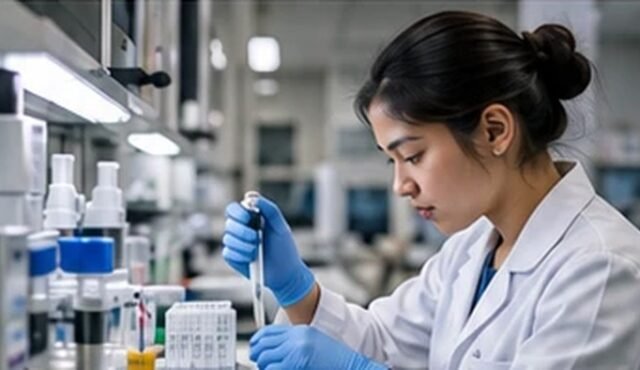
At 3 a.m., the hospital laboratory sounds different. The analyzers hum, the pneumatic tube thumps now and then, and a single MedTech may be covering chemistry, hematology and the blood bank at once. Night duty is unavoidable in a 24-hour laboratory, and many MedTechs work it for years. It is worth understanding what it does to us, and how to protect ourselves.
The body keeps its own clock
Humans are built to sleep at night. Working through it disrupts the circadian rhythm that regulates sleep, hormones, digestion and alertness. In 2019, a working group of the International Agency for Research on Cancer (IARC) classified night shift work as “probably carcinogenic to humans” (Group 2A), based on limited evidence in humans and stronger evidence from animal and mechanistic studies. That classification describes the strength of evidence, not the size of the risk, and researchers still debate it, but it is a reminder that night work is not health-neutral.
The more immediate problems are familiar to anyone who has done a week of nights: poor daytime sleep, fatigue, irritability, weight gain, and the dangerous drowsiness of the drive home. Health care is among the occupations with the highest rates of short sleep in analyses by the US National Institute for Occupational Safety and Health (NIOSH).
Fatigue is a patient-safety issue
Tired people make more mistakes: transposed numbers, missed delta checks, wrong-tube errors. At night, when staffing is thin and STAT requests pile up, there are also fewer people to catch them. Good laboratories design for this with clear critical value procedures, autoverification rules and realistic staffing.
Know your right to night differential
Under Article 86 of the Labor Code, covered employees must be paid a night shift differential of not less than 10% of their regular wage for each hour worked between 10 p.m. and 6 a.m. Government and private hospitals may have their own rules and collective agreements, so check your payslip and ask HR if the differential is missing.
Habits that help
NIOSH and sleep researchers recommend several practical strategies:
- Protect your sleep window. Treat daytime sleep as an appointment. Tell your household.
- Make the room dark, quiet and cool. Blackout curtains, an eye mask and earplugs or a fan help a lot in a noisy Filipino household.
- Keep a consistent pattern across a run of night shifts, and on permanent nights, try to keep it on days off too.
- Time your caffeine. Coffee early in the shift, not in the last few hours before you plan to sleep.
- Eat light at night. Heavy meals at 2 a.m. worsen sleepiness and digestion.
- Watch the commute. If you are dangerously sleepy, nap before driving or ride home instead.
- Move. Regular exercise improves sleep quality and stress.
- Get checked if sleep problems persist.
The night shift is when the lab proves it never closes. It should not cost the people working it their health.
What labs and managers can do
Rotate forward (day to evening to night), avoid quick returns between shifts, allow short breaks or naps where safe, never staff nights with a single person when workload does not allow it, and make sure night staff get the same training and recognition as day staff.
References
- IARC Monographs Volume 124: Night Shift Work: publications.iarc.who.int
- ISGlobal, “IARC retains probably carcinogenic classification for night shift work”: isglobal.org
- “IARC 2019: Night shift work is probably carcinogenic,” J Occup Med Toxicol: pmc.ncbi.nlm.nih.gov
- NIOSH Science Blog, “Sleep and Work”: cdc.gov
- Labor Code of the Philippines, Book III, Article 86: chanrobles.com